
Voice Cloning Scams: What to Do If a “Loved One” Calls in a Panic

Jonathan Dolphin
President, 21st Century Bank
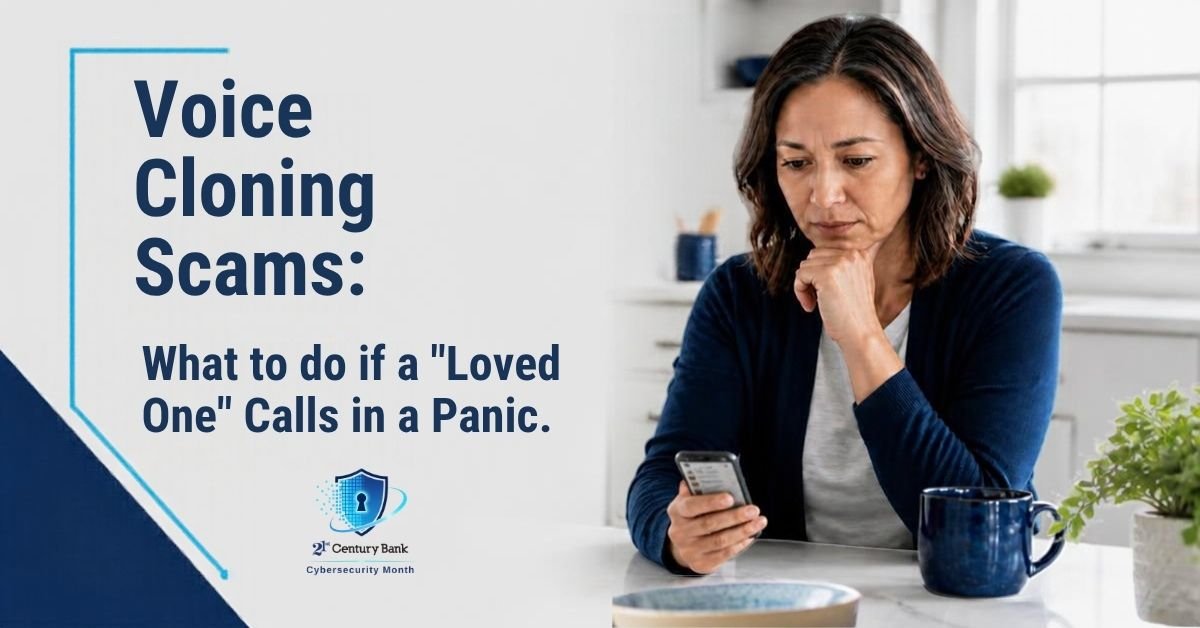
The phone rings at an unusual hour. When you answer, you hear a familiar voice crying, frantic, and barely able to speak. They say they’ve been in a severe car accident or arrested in an unfamiliar city. Before you can ask what happened, they beg you to send money for bail or medical care right away.
Hearing a loved one’s voice on the line used to be absolute proof of an emergency. Artificial intelligence has changed that reality. Scammers now use generative AI voice cloning software to recreate the exact tone, cadence, and vocal style of family members.
What sounds like your child, grandchild, or partner might actually be a synthetic recording designed to exploit your emotions.
Understanding how these calls unfold and having a clear action plan allows you to respond with confidence instead of panic.
The Anatomy of a Voice Clone Scam
Scammers follow a distinct script during voice-cloning calls. Recognizing this pattern as it happens helps you spot the fraud before taking action.
The Emotional Hook
The call opens in high chaos. The fake caller speaks quickly, cries, or claims the line is poor to mask any minor glitches in the synthetic audio. They focus entirely on creating extreme fear so you react emotionally instead of logically.
The Hand-off to an "Authority"
After establishing the emergency, the cloned caller quickly passes the phone to an accomplice. This person claims to be a lawyer, police officer, court official, or doctor. They use official terminology to make the situation sound formal and dire.
The Secrecy Demand
The fake authority figure insists that you tell no one else. They warn that contacting other relatives, posting online, or calling local police will put your loved one in greater legal or physical danger.
The Untraceable Payment
The caller demands immediate payment through non-traditional channels. They ask for wire transfers, peer-to-peer app payments, cryptocurrency, or retail gift cards. They refuse standard billing procedures or official online payment portals.
The Science Behind the Trick
You might wonder how a scammer got hold of your relative’s voice in the first place. Today’s AI tools don’t require lengthy audio studio files to build a convincing clone.
Modern generative software can create a spot-on voice clone using as little as three seconds of audio. Scammers gather these audio clips from public social media posts, uploaded videos, voicemail greetings, or recorded calls.
In controlled testing, listeners could only distinguish a cloned voice from a real one about 37.5% of the time. You cannot rely on your ears alone to verify identity during an unexpected call.
The "Pause & Verify" Protocol
When an emergency call comes in, drop the scammer’s script and follow this four-step verification plan.
Step 1: The Instant Break
Take a breath and hang up the phone. Ending the call instantly interrupts the scammer’s psychological pressure loop. Hanging up doesn’t put a real relative in harm’s way, but taking a moment to think clearly protects your family from fraud.
Step 2: The Known-Number Callback
Never use the incoming caller ID to return the call, and don’t dial any phone numbers provided by the caller. Open your mobile phone’s address book and dial your relative’s regular contact number directly.
In most cases, they answer while sitting safely at work or home, entirely unaware of the call you just received.
Step 3: The Secret Family Safe Word
Set up a secret “safe word” or code phrase with your family members in advance. Pick something simple that wouldn’t appear on social media or in public conversations.
If someone calls claiming to be in a crisis, ask them for the family safe word. An AI voice generator or fraudster won’t know it.
Step 4: The Mutual Check
If your loved one doesn’t pick up when you call them back, stay calm. Reach out to a spouse, roommate, parent, or close friend who might know their current location. A secondary contact can quickly confirm whether the emergency is real.
Emergency Payment Red Flags
Real law enforcement agencies, hospitals, and legal offices follow strict, transparent procedures. Keep these basic payment rules in mind:
- No legal authority demands gift cards: Police departments and courts never accept retail gift cards or digital app transfers for bail.
- Official systems provide paperwork: Legitimate medical facilities and legal representatives provide verified billing details, official case numbers, and institutional payment options.
- Pressure equals fraud: Any request demanding immediate payment while forbidding you from hanging up to verify details is an automatic warning sign.
Protection Through Preparation
AI voice technology sounds intimidating, but fraudsters can’t succeed without your panic. By discussing safe words with your family and sticking to a direct verification process, you keep complete control over your personal and financial security.
Recent Posts

Not sure where to start?
Fill in the form to view and download any of our business checklists with helpful links!

Want to explore more ways to keep your family's accounts secure?
View our Cybersecurity Resources to access additional guides and consumer protection resources.